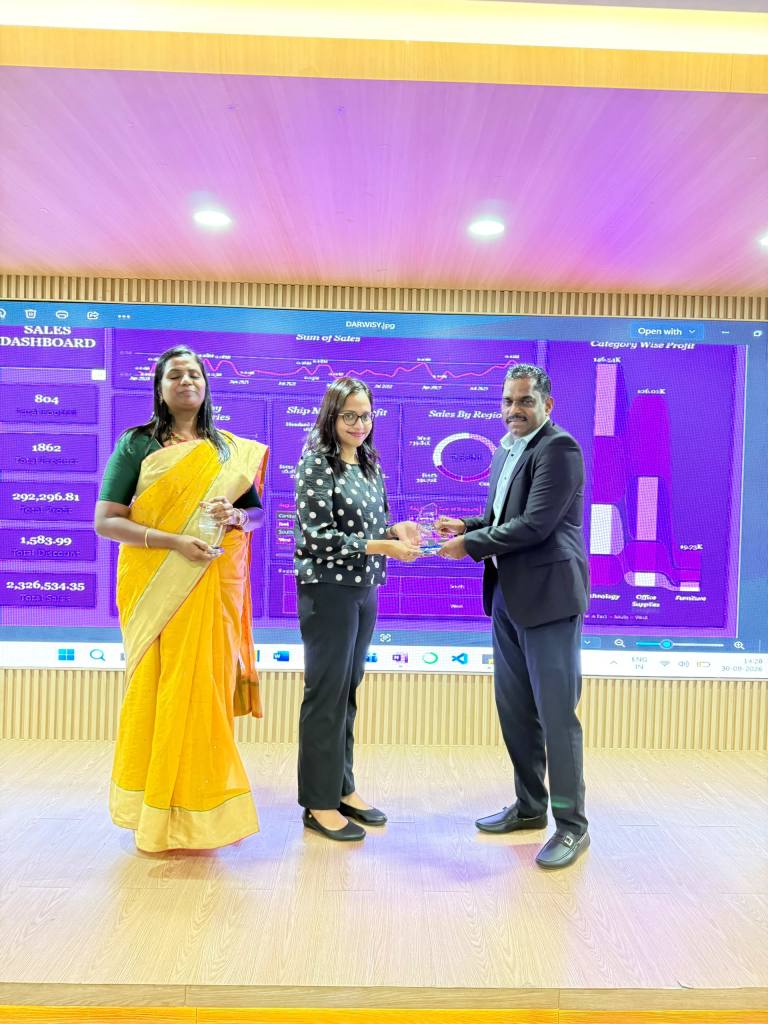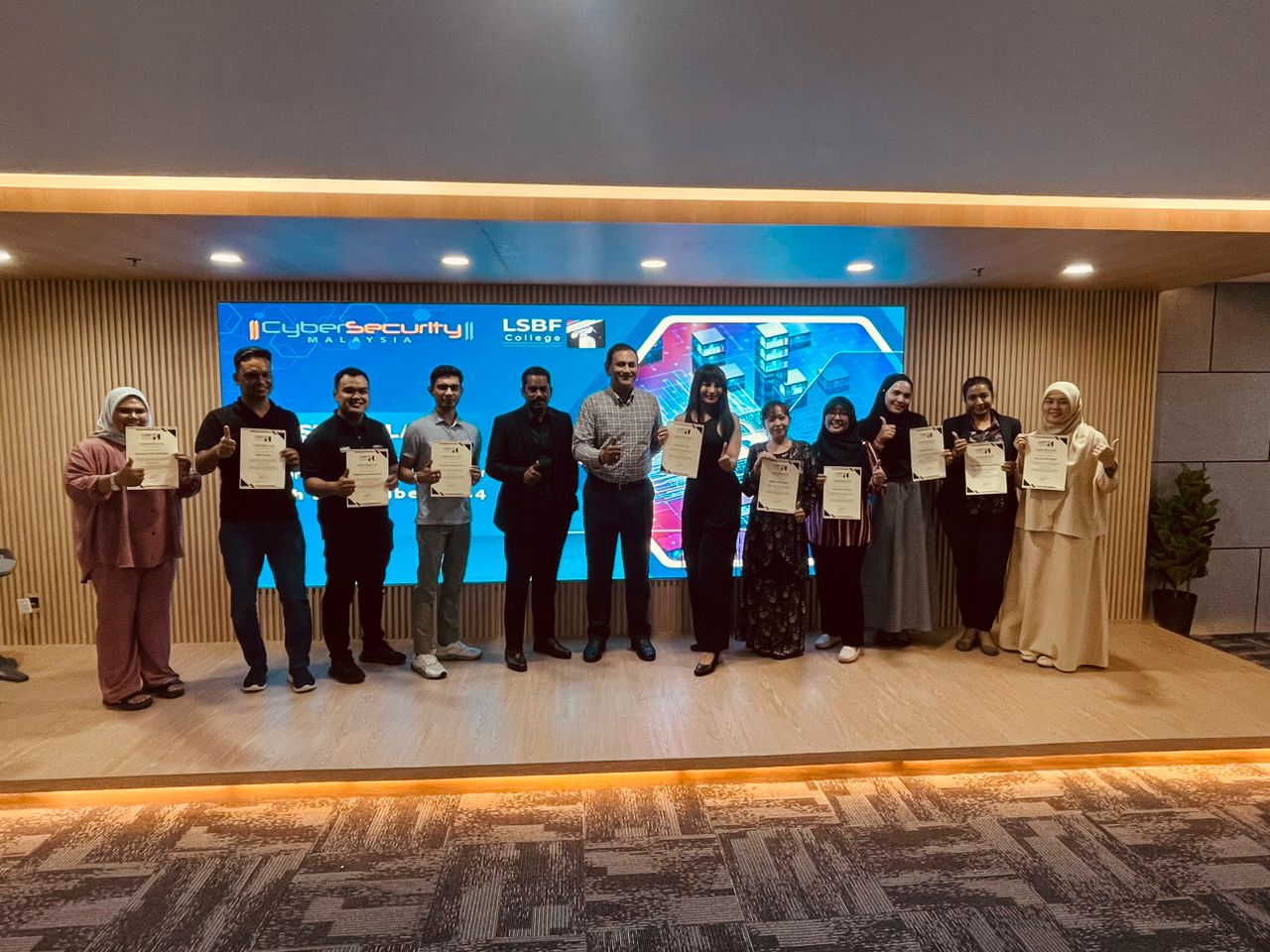
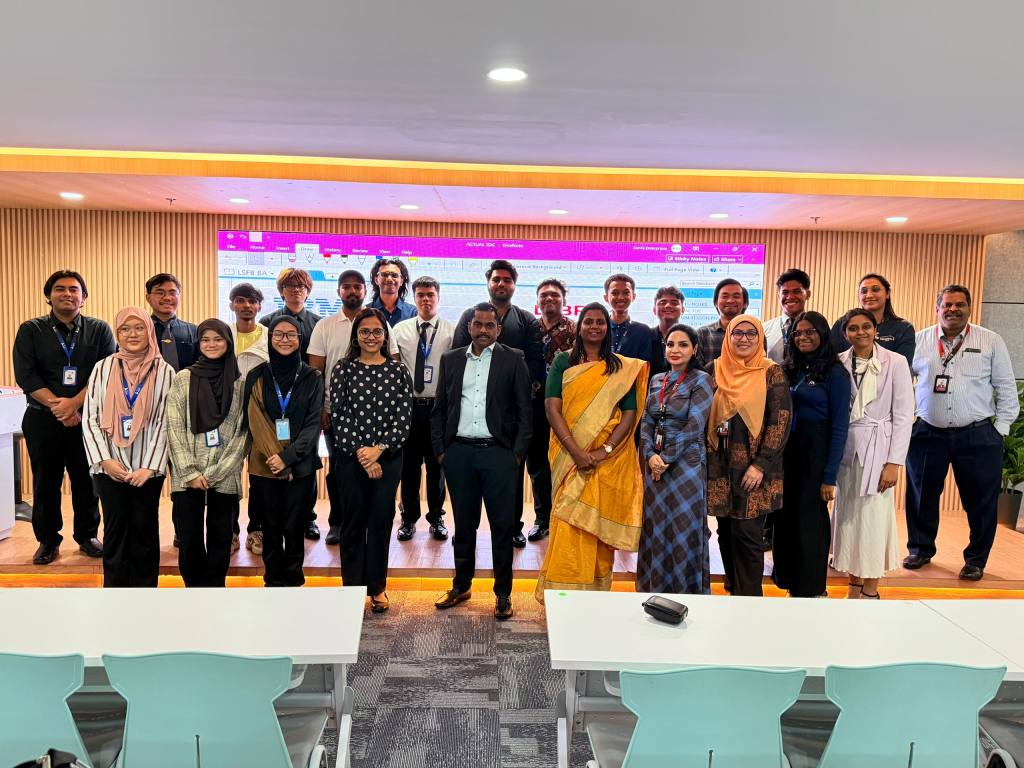
Empowering students with business intelligence, data analytics, digital reporting and decision-making skills as part of LSBF Malaysia’s commitment to developing future-ready, globally competitive graduates.
KUALA LUMPUR, MALAYSIA – As industries continue to embrace artificial intelligence, automation and data-driven technologies, the skills required of tomorrow’s workforce are changing rapidly. Recognising the importance of preparing students for these developments, the London School of Business & Finance (LSBF) Malaysia successfully organised a three-day IBM Business Analytics Masterclass in collaboration with IBM and Transneuron, providing students with valuable exposure to practical business analytics and industry-relevant digital competencies.
The masterclass forms part of LSBF Malaysia’s broader commitment to delivering an education experience built around four interconnected strategic pillars: Industry-Relevant Programmes, AI-Integrated Learning, Student Mobility and Employability.
Through this initiative, LSBF Malaysia continues to strengthen the connection between academic education and real-world industry requirements, ensuring that students have opportunities to develop the practical knowledge, analytical capabilities and professional confidence needed in an increasingly technology-driven workplace.
Bringing Industry Expertise Directly into the Classroom
The three-day programme was delivered by Nivedha Raghunath, an industry professional specialising in business analytics, data analytics and artificial intelligence, who guided students through practical applications of business intelligence, data analysis and reporting.
The sessions focused on helping students understand how organisations collect, organise, interpret and visualise information to support business decisions.
Students were introduced to tools and analytical approaches used in modern business environments, particularly Microsoft Power BI and Microsoft Excel, and explored how data can be transformed from raw information into meaningful insights.
The masterclass also encouraged students to think beyond simply producing reports. They were guided to consider how analytical findings can help organisations understand business performance, identify operational challenges, monitor key performance indicators and make more informed strategic decisions.
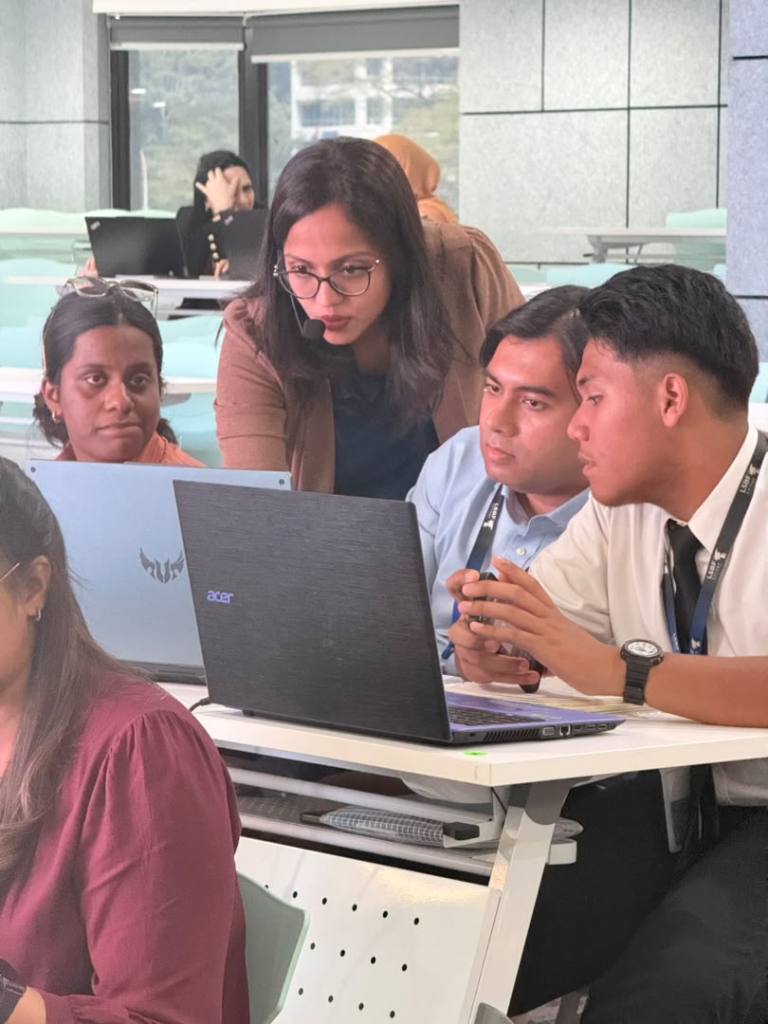
Three Days of Practical Business Analytics Learning
The masterclass introduced students to a range of essential analytical concepts and digital tools, with a particular focus on Microsoft Excel, Microsoft Power BI, dashboard development and data-driven decision-making.
Understanding Business Analytics and Its Role in Modern Organisations
Students were introduced to the fundamentals of business analytics and how data supports business strategy, operational efficiency and performance improvement.
The sessions explored how organisations use information to understand customer behaviour, evaluate business results, monitor operational performance and identify opportunities for growth.
Students also developed an appreciation of how data-driven approaches can support decisions across finance, accounting, marketing, business management and operations.
Microsoft Excel for Business Analysis and Reporting
Excel remains an important tool across many industries, particularly in financial reporting, business analysis, budgeting and performance monitoring.
During the masterclass, students gained exposure to practical approaches for organising and analysing business information using Excel.
Key learning areas included data organisation, spreadsheet-based analysis, performance reporting, identifying patterns and trends, and presenting business information in a structured and meaningful format.
The sessions reinforced how spreadsheet skills can be applied in everyday business activities, from monitoring sales performance to supporting management reporting and operational decisions.
Microsoft Power BI and Interactive Dashboard Creation
One of the major highlights of the masterclass was the introduction to Microsoft Power BI, a business intelligence platform widely used for data visualisation and management reporting.
Students explored how business data can be transformed into interactive dashboards, enabling information to be presented more clearly and effectively.
The practical learning covered the principles of dashboard creation, selecting suitable charts and visualisations, presenting key performance indicators and communicating analytical findings through visual reports.
By understanding how dashboards work, students gained exposure to the ways organisations monitor performance, identify trends and make decisions based on accessible, visual information.
Key Performance Indicators and Business Performance Monitoring
Students also explored the importance of Key Performance Indicators (KPIs) and how organisations use measurable data to assess progress against business objectives.
The masterclass introduced the role of performance reporting in monitoring sales, revenue, business growth and operational outcomes.
This component helped students understand that business analytics is not limited to technical roles. It is an increasingly important capability for professionals across different business functions.
Data Visualisation and Business Storytelling
Another important aspect of the programme was learning how to communicate business insights effectively.
Students were introduced to the importance of presenting data in a clear, structured and meaningful manner, allowing decision-makers to understand key findings without having to interpret large volumes of raw information.
This reinforced the value of combining analytical thinking with communication skills, enabling future professionals to explain performance trends, highlight business challenges and support recommendations.
Analytical Thinking and Data-Driven Decision-Making
Beyond technical knowledge, the masterclass encouraged students to develop problem-solving and critical-thinking capabilities.
Students explored how data can support business decisions, why the quality of information matters and how analytical findings can help organisations respond to challenges.
These transferable skills are particularly relevant in a workplace where employers increasingly value graduates who can interpret information, identify opportunities and contribute to practical solutions.
Industry-Recognised Learning Through Verifiable IBM Credentials
A significant feature of the collaboration is the opportunity for students to gain verifiable digital credentials issued by IBM upon meeting the relevant programme requirements.
These credentials provide an additional dimension to the learning experience by recognising achievements beyond conventional academic assessments.
IBM digital credentials are designed to provide verifiable information about learning achievements and can be shared through professional networks and digital portfolios.
For LSBF Malaysia students, the opportunity to earn an IBM credential offers several benefits:
- Recognition from a Global Technology Leader: An opportunity to demonstrate learning achievements through credentials associated with IBM.
- Verifiable Professional Credentials: Digital recognition that allows prospective employers and professional contacts to review the credential and its associated learning requirements.
- Stronger Professional Profiles: Students can showcase eligible credentials on LinkedIn, their CVs and professional portfolios.
- Practical Skills Development: Learning that complements academic studies through exposure to business analytics and digital reporting.
- Career Readiness: An opportunity to demonstrate continued professional development and commitment to acquiring relevant industry skills.
The integration of industry-connected learning and verifiable credentials reflects LSBF Malaysia’s commitment to strengthening graduate employability.
It also reinforces the institution’s belief that students should have opportunities to demonstrate not only their academic knowledge, but also the practical competencies they develop throughout their educational journey.
Preparing Graduates for the Future of Work
Commenting on the importance of industry collaboration and future-ready education, Dr Sajilal Divakaran, Director – LSBF Malaysia, shared the following proposed statement:
“At LSBF Malaysia, our responsibility goes far beyond providing academic qualifications. We must ensure that our students are prepared for the realities of the working world, where technology, artificial intelligence and industry expectations are constantly evolving.
Our four strategic pillars – Industry-Relevant Programmes, AI-Integrated Learning, Student Mobility and Employability – are not simply statements of intent. They represent the direction in which we are taking our institution.
Collaborating with global industry leaders such as IBM allows us to bring relevant industry knowledge and practical learning experiences directly to our students. The opportunity for students to earn verifiable IBM credentials further strengthens the value of this learning experience and supports their professional development.
Our ultimate goal is to develop graduates who are not only academically competent, but also confident, adaptable, globally minded and equipped with the practical skills needed to succeed in an ever-changing world.”
Strengthening Partnerships That Create Meaningful Student Opportunities
The successful completion of the three-day masterclass reflects LSBF Malaysia’s continued commitment to developing meaningful collaborations with industry leaders.
The institution extends its sincere appreciation to IBM and Transneuron for supporting the initiative and contributing towards an industry-connected learning experience for students.
Beyond Academic Qualifications: Building Future-Ready Graduates
The IBM Business Analytics Masterclass represents another meaningful step in LSBF Malaysia’s journey towards building a future-ready institution.
As industries continue to evolve, graduates will need more than academic knowledge to navigate the professional world. They will require digital literacy, analytical capabilities, adaptability, communication skills and a willingness to embrace continuous learning.
LSBF Malaysia remains committed to creating opportunities that bring these capabilities into the student experience through academic innovation, industry partnerships, international collaborations and professional development initiatives.
By connecting students with global industry leaders and providing opportunities to earn verifiable professional credentials, LSBF Malaysia is working towards an educational experience that extends beyond the classroom.
Our focus is not simply on preparing students to graduate. It is on preparing them to enter the workforce with relevant skills, professional confidence and the global outlook needed to pursue meaningful careers.
Through our four strategic pillars — Industry-Relevant Programmes, AI-Integrated Learning, Student Mobility and Employability — LSBF Malaysia continues to work towards its vision of developing future-ready graduates.
LSBF Malaysia – Your Passport to a Global Career.